

Another Music Festival 2027

Another Music Festival: Politics

Saturday 16 January + Tuesday 19 January + Friday 22 January 2027

St. John’s Church Waterloo, London

Francis Poulenc
Sonata for Violin and Piano, FP 119
Roman Mints, violin · Charles Owen, piano

Franz Liszt
Funérailles, S.173 No. 7
from Harmonies poétiques et religieuses

Arnold Schoenberg
Ode to Napoleon Buonaparte, Op. 41
For reciter, string quartet and piano · Text by Lord Byron
Richard Burkhard, reciter · Sasha Grynyuk, piano
Roman Mints and Alexandra Raikhlina, violins
Mikhail Rudoy, viola · Kristina Blaumane, cello

Johann Strauss II
Éljen a Magyar!, Op. 332
Polka schnell · Version for piano four hands
Katya Apekisheva and Charles Owen, piano duet

INTERVAL

Frédéric Chopin
Fantaisie in F minor, Op. 49
Katya Apekisheva, piano

Louis Spohr
String Sextet in C major, Op. 140
Igor Yuzefovich and Alexandra Raikhlina, violins
Mikhail Rudoy and Milena Simovic, violas
Kristina Blaumane and Julia Morneweg, cellos

Arvo Pärt
Da pacem Domine
For mixed voices a cappella
EXAUDI Vocal Ensemble · James Weeks, conductor

Pavel Haas
Suite for Oboe and Piano, Op. 17
Peter Facer, oboe

Leoš Janáček
Piano Sonata 1. X. 1905, “From the Street”
Charles Owen, piano

Valerie Coleman
Wish — Sonatine for Flute and Piano
Karen Wong, flute · Katya Apekisheva, piano

Neil Tòmas Smith
3 Political Songs
For SATB voices · World première
EXAUDI Vocal Ensemble · James Weeks, conductor

INTERVAL

Franz Liszt
La Marseillaise, S.237
After the anthem by Claude Joseph Rouget de Lisle
Victor Maslov, piano

Olivier Messiaen
Quatuor pour la fin du Temps
Quartet for the End of Time · For violin, clarinet, cello and piano
Roman Mints, violin · Lily Payne, clarinet
Kristina Blaumane, cello · Katya Apekisheva, piano

Maurice Ravel
Chansons madécasses, M.78
For voice, flute, cello and piano · Poems by Évariste de Parny
Amy Payne, voice · Karen Wong, flute
Kristina Blaumane, cello · Sasha Grynyuk, piano

Karl Amadeus Hartmann
String Quartet No. 1, “Carillon”
Elly Su and Yuri Kalnits, violins
Milena Simovic, viola · Julia Morneweg, cello

Cabaret songs

Mischa Spoliansky
Alles Schwindel
Words by Marcellus Schiffer

Georges Bizet / Friedrich Hollaender
An allem sind die Juden schuld
Words by Friedrich Hollaender, to the Habanera from Bizet’s Carmen

Friedrich Hollaender
Raus mit den Männern aus dem Reichstag
Music and words by Friedrich Hollaender

Mischa Spoliansky
Das lila Lied
Words by Kurt Schwabach

Kurt Weill
Die Moritat von Mackie Messer
From Die Dreigroschenoper (The Threepenny Opera) · Words by Bertolt Brecht
Amy Payne, voice · Vadym Kholodenko, piano
Roman Mints, grinding organ

Frank Bridge
Lament, H.117
Arranged for string sextet by Paul Silverthorne
Elly Su, Yuri Kalnits, Milena Simovic, Angela Torres,
Kristina Blaumane and Julia Morneweg

Howard Skempton
The Durham Strike

Louis Moreau Gottschalk
The Union, Op. 48
Concert paraphrase on national airs
Vadym Kholodenko, piano

Victoria Poleva
Verbum
For flute, clarinet, violin, viola, cello and piano · World première|
Karen Wong, flute · Lily Payne, clarinet · Roman Mints, violin
Milena Simovic, viola · Kristina Blaumane, cello
Sasha Grynyuk, piano

Frederic Rzewski
Coming Together
For speaker and instrumental ensemble · Text by Sam Melville
Victor Maslov, piano · Roman Mints, violin
Kristina Blaumane, cello · Lily Payne, clarinet · Karen Wong, flute
Richard Burkhard, speaker

About the Festival

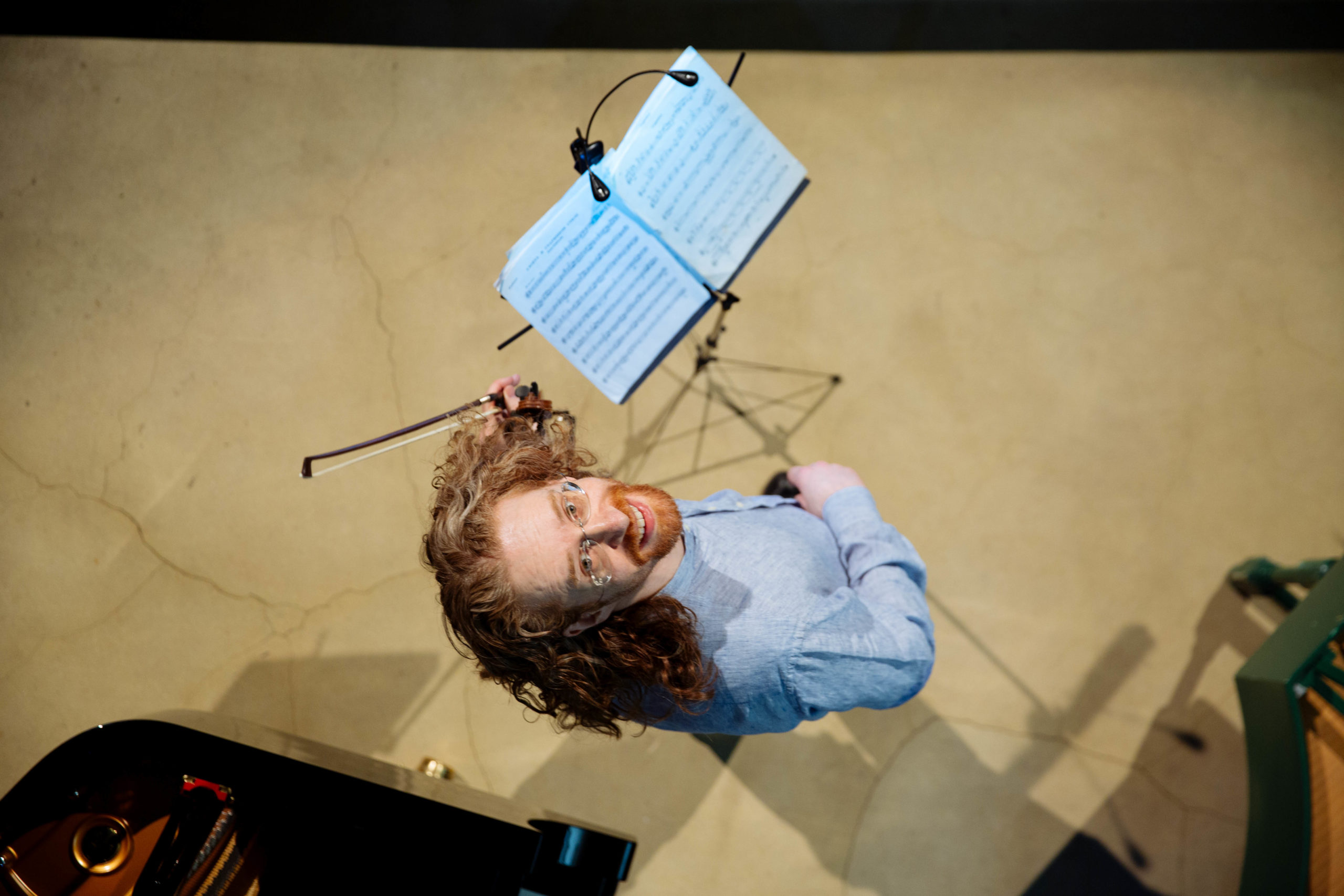
Artistic director and violinist Roman Mints brings the second annual Another Music Festival to St John’s Church, Waterloo, London, from 16–22 January 2027, with three concerts exploring the theme of Politics. 

Following the success of its inaugural 2026 festival and its Displaced concerts, the Festival returns with an international roster of acclaimed artists and a programme spanning revolution, resistance, war, persecution and protest. Challenging the familiar idea that music exists above politics, the concerts explore how composers have engaged with the defining events and struggles of their times.

Exploring themes of national identity, political oppression, social change and the struggle for freedom, the programme ranges from Franz Liszt’s La Marseillaise and Arnold Schoenberg’s Ode to Napoleon Buonaparte to Leoš Janáček’s Piano Sonata 1. X. 1905, “From the Street”, Howard Skempton’s The Durham Strike and Frederic Rzewski’s Coming Together. Cabaret songs by Mischa Spoliansky and Friedrich Hollaender bring the political tensions of Weimar Germany into sharp focus. 

Other notable pieces include the world premieres of Neil Tòmas Smith’s 3 Political Songs performed by EXAUDI vocal ensemble, conducted by James Weeks and Victoria Poleva’s Verbum for flute, clarinet, violin, viola, cello and piano. 

Together, these works demonstrate how music can bear witness to history, confront power and give voice to human experience.

Another Music Festival will feature artists including Katya Apekisheva (piano), Kristina Blaumane (cello), Richard Burkhard (reciter/speaker), EXAUDI Vocal Ensemble, Peter Facer (oboe), Sasha Grynyuk (piano), Vadym Kholodenko (piano), Yuri Kalnits (violin), Victor Maslov (piano), Roman Mints (violin, grinding organ), Julia Morneweg (cello), Charles Owen (piano), Amy Payne (voice), Lily Payne (clarinet), Victoria Poleva (composer), Victor Maslov (piano), Alexandra Raikhlina (violin), Mikhail Rudoy (viola), Milena Simovic (viola), Elly Su (violin), Angela Torres (viola), Igor Yuzefovich (violin), James Weeks (conductor) and Karen Wong (flute).

Roman Mints said, “To me, asking whether a musician should ‘meddle’ in politics is bizarre to begin with. A musician already lives in a world of power, violence, freedom, oppression and other people. There are different ways to respond to it, and different ways to speak about it. But insisting that all of this be left outside the concert hall tells us, above all, what the person making that demand wants. And life doesn’t always give us what we want.”
2026: DISPLACED: three concerts of chamber music shaped by exile and migration

Paul Hindemith — Sonata in D major, Op. 11 No. 2 (1918)
Roman Mints (violin), Katya Apekisheva (piano)

Tania León — Homenatge (2011)
Vadym Kholodenko (piano)

Frédéric Chopin — Cello Sonata in G minor, Op. 65 (1846)
Kristina Blaumane (cello), Katya Apekisheva (piano)

Sergei Rachmaninov — Preludes
– Op. 23 No. 2 (1901)
– Op. 3 No. 2 (1892)
Vadym Kholodenko (piano)

Stefania Turkewich — Sonata for Violin and Piano (1935, UK Premiere)
Iryna Marchuk (violin), Maxym Artemenko (piano)

Alexey Kurbatov — Piano Quartet (World Premiere)
Vadym Kholodenko (piano), Roman Mints (violin), Mikhail Rudoy (viola), Kristina Blaumane (cello)

Igor Stravinsky — L’Histoire du soldat (Soldier’s Tale), Trio (1918)
Natalia Lomeiko (violin), Lily Payne (clarinet), Sasha Grynyuk (piano)

Peter Philips — Pavana Pagget (Pavana Dolorosa) (1593)
Richard Gowers (harpsichord)

Elena Langer — Landscape with Three People (2015, London Premiere)
Hilary Cronin (soprano), Francis Gush (countertenor), Richard Gowers (piano), Peter Facer (oboe), Roman Mints (violin), Meghan Cassidy (viola), Ashok Klouda (cello)

Béla Bartók — Fifteen Hungarian Peasant Songs, Sz. 71 (1914/1918)
Katya Apekisheva (piano)

Andrzej Panufnik — Song to the Virgin Mary, for string sextet (1964)
Natalia Lomeiko, Alexandra Raikhlina (violins), Yuri Zhislin (viola), Meghan Cassidy (viola), Julia Morneweg (cello), Ashok Klouda (cello)

Leonid Desyatnikov — The Leaden Echo (1994, UK Premiere)
Francis Gush (countertenor), Roman Mints (violin), Mikhail Rudoy (viola), Ashok Klouda (cello), Julia Morneweg (cello), Stacey Watton (double bass), Hilary Cronin (voice), Konstantin Shemetov, Richard Hyams,  Stephanie Shore (trombones), Joanne Chiang (timpani)
Conductor: Otis Enokido-Lineham

Valentin Silvestrov — Postludium No. 1 DSCH (1981)
Hilary Cronin (soprano), Roman Mints (violin), Ashok Klouda (cello), Sasha Grynyuk (piano)

Bechara El-Khoury — Sextett for Six Violins, Op. 218 (2009)
Roman Mints, Iryna Marchuk, Sofiia Yavorska, Anna Nemchuk, Kateryna Kolosok, Sofi Lomidze (violins)

Franz Waxman — Four Scenes of Childhood (1925)
Patrick Savage (violin), Katya Apekisheva (piano)

George Enescu — Piano Quintet in A minor, Op. 29 (1940)
Sasha Grynyuk (piano), Elly Suh (violin), Alexandra Raikhlina (violin), Milena Simovic (viola), Julia Morneweg (cello)

Theodore Akimenko — Chant d’Automne, Op. 16 No. 1 (1897)
Fantasy, Op. 26bis (1903)
Sasha Grynyuk (piano)

Frederick Delius — Cello Sonata (1916)
Rebecca Gilliver (cello), Sasha Grynyuk (piano)

Boris Filanovsky — Supremus 3, for two violins (World Premiere)
Alexandra Raikhlina (violin), Roman Mints (violin)

Alexander Zemlinsky — Clarinet Trio in D minor, Op. 3 (1896)
Lily Payne (clarinet), Katya Apekisheva (piano), Rebecca Gilliver (cello)

Osvaldo Golijov — Last Round (1996)
Roman Mints, Elly Suh, Alexandra Raikhlina, Patrick Savage (violins), Yuri Zhislin, Milena Simovic (violas), Rebecca Gilliver, Julia Morneweg (cellos)

Curated by violinist Roman Mints, this year’s Another Music Festival celebrates the legacy of composers who lived and created in exile — some forced, some chosen — and how separation from their homeland reshaped their art.

From historical giants such as Chopin, Stravinsky, Hindemith, and Enescu to neglected voices like Ukrainian composer Theodore Akimenko, the festival traces a journey through music shaped by migration.

Across three evenings of chamber music, international artists perform works by Chopin, Rachmaninov, Stravinsky, Hindemith, Enescu and others, alongside new works and UK premieres by contemporary composers who continue the conversation between displacement and creativity.

Each programme offers a different perspective on exile — from nostalgia and memory to renewal and transformation.

Behind the Music

Paul Hindemith left Germany under growing political pressure after his music was branded “degenerate,” finding refuge first in Switzerland and later in the United States, where he rebuilt his career as a composer and teacher.

Sergei Rachmaninov escaped revolutionary Russia and spent his remaining years haunted by a lost homeland, his later works steeped in the nostalgia of memory. Igor Stravinsky turned exile into reinvention, reshaping the sound of modern music from Paris to Hollywood.

George Enescu balanced two identities — Romanian and French — his late works coloured by the longing for home. Béla Bartók left Hungary during the Second World War, gravely ill yet composing his luminous Concerto for Orchestra in New York, a testament to creative resilience. Andrzej Panufnik destroyed much of his music during the Warsaw Uprising, later reconstructing it in exile after defecting to England, choosing artistic freedom over compromise.

Among the displaced were Ukrainian composers Theodore Akimenko, who left Ukraine after the Bolshevik Revolution and found refuge in France, and Stefania Turkewich, the first female Ukrainian symphonist, who fled westward from Soviet occupation — her manuscripts scattered across Europe as she journeyed through Vienna, Rome and London.

Tania León, born in Havana, found freedom in New York, turning migration itself into rhythm. Bechara El-Khoury, marked by Lebanon’s civil war, and Osvaldo Golijov, a Jewish Argentinian raised among exiles, each transformed displacement into vision — the sound of survival.

Across continents and generations, these artists reveal exile as both loss and renewal — proof that even uprooted, the creative spirit finds new soil in which to grow.

In the Words of Musicologist Mariia Romanets

“Migration and human mobility create a fabric of contrasts – rich with new horizons, meanings, and dialogues, yet shadowed by the profound struggle of belonging. to step into another society is to learn its rhythms, embrace its customs and still carry within an irrepressible ache for the lost homeland. this “in-betweenness” holds the soul between what is already gone and what is still out of reach – no longer fully at home, not yet fully embraced – a space of longing where identity is tested, reshaped, and renewed. Separated from their homelands, some émigré musicians, especially composers, remained spiritual exiles, struggling to bridge the cultural gap between their past and present. But history equally speaks of others who, though strangers at first, found belonging and left a lasting mark on the cultural landscape of their adopted nations.” —Mariia Romanets, musicologist

This field is for validation purposes and should be left unchanged.
Name(Required)
Please let us know what's on your mind. Have a question for us? Ask away.